Riding the Para-Cosmic
A game-first sci-fi TTRPG for crews operating in hostile systems, unstable settlements, broken infrastructure, and political territory that rarely explains itself twice.
The table describes intent. The Observer frames pressure. Dice, attributes, skills, position, injury, gear, and bad information decide how much reality bends before it snaps back.
The near future got crowded.
Alien contact brings interstellar travel into human reach before human institutions fully understand what that reach costs. Old governments, imperial domains, corporate interests, research enclaves, private crews, and frontier settlements begin operating inside a larger map.
The setting leans hard enough into science fiction to care about systems: transport, power, communication, medicine, violence, cybernetics, psionics, logistics, territory, leverage. The weirdness is present, but it has edges. Someone can test those edges. Someone can get hurt doing it.
A crew might spend an entire campaign planetside inside a city, station, colony, or corporate zone. Another table might push outward into shipping routes, salvage claims, rescue work, research expeditions, diplomatic missions, mercenary contracts, monster problems, or a ship that everyone insists is still safe.
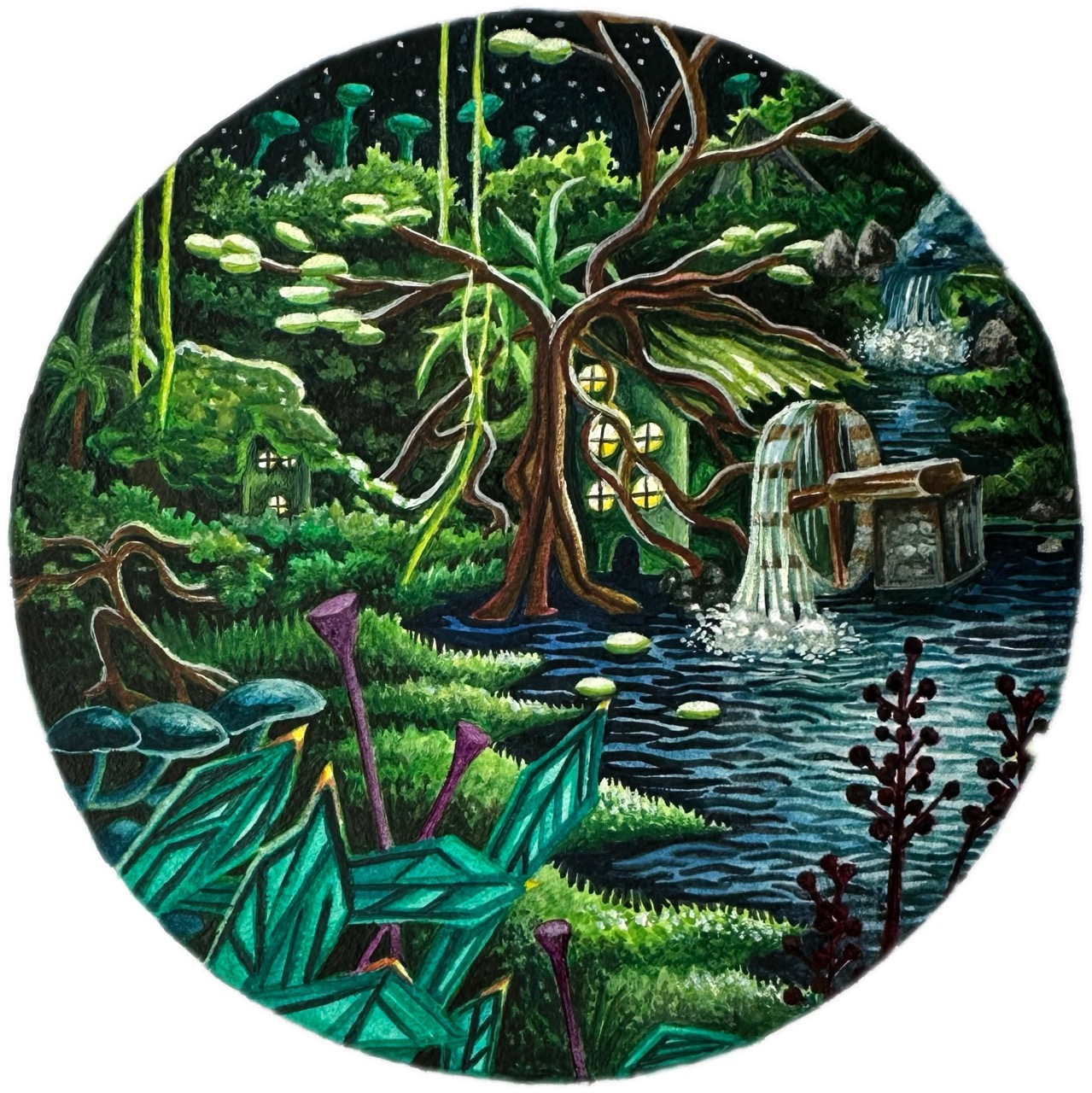
Para-Cosmic is built entirely through human labour,
from the game design and writing to the visual art.
No generative AI was used in the creative development.
Get the sneak peek packet.
The table has two jobs.
Players control the main characters. Each player brings a sheet, tracks condition, makes decisions, and speaks through one person in the fiction.
The Observer runs the rest: terrain, opposition, consequences, unknowns, NPCs, factions, weather, machines, institutions, wildlife, violence, timing, and the hard line between “that happens” and “roll for it.”
| Role | At the table |
|---|---|
| Player | States intent, chooses approach, rolls when procedure calls for it, tracks character state, and lives with the consequences of the attempt. |
| Observer | Presents situations, calls for relevant tests, sets thresholds or opposition, plays the world, and applies outcome to the current state. |
| Crew | The party may be contractors, researchers, security agents, medics, criminals, pilots, technicians, diplomats, soldiers, drifters, or a bad combination of several. |
Bring an Observer, a few player characters, and the starter rules.
Get the Sneak Peek PacketTable procedure.
A scene starts with conditions. Then intent. Then approach. Then procedure, if the result is uncertain enough to deserve one.
Routine actions stay in conversation. Procedure appears when the table needs an answer with teeth.
Use the starter scene to see the procedure in motion.
Get the Sneak Peek PacketCore roll.
The basic roll is compact:
Active attempts usually use an Attribute + Skill test. The attribute comes from the way the character applies themselves. The skill comes from the field of practice involved.
Resistance checks can use two attributes when the character is enduring something, keeping composure, resisting panic, holding ground, or staying functional under strain.
Want the roll procedure, character basics, and starter situation in one file?
Get the Sneak Peek PacketPosition changes the roll.
Advantage and disadvantage track the condition of the attempt. A better angle, correct tool, clear read, prepared setup, or exposed weak point can improve a roll. Injury, bad footing, missing information, pressure, damaged gear, or the wrong approach can make the same action much worse.
| Before the roll | What changes |
|---|---|
| Inspection before force | The player may identify a weaker target or avoid wasting output on the strongest part of the obstacle. |
| Leverage before negotiation | The social scene changes before anyone tries to persuade. |
| Cover before shooting | The combat state shifts before damage becomes the only question. |
| Stabilization before repair | The technical problem becomes less volatile. |
Strong play often happens before the dice hit the table.
Character construction.
A character begins as a set of capacities, limits, training, and liabilities. Species gives the body and baseline tendencies. Attributes shape raw capability. Skills and specializations describe practiced competence. Gear, feats, talents, injuries, and vigor decide how that character performs when the scene turns ugly.
Genus
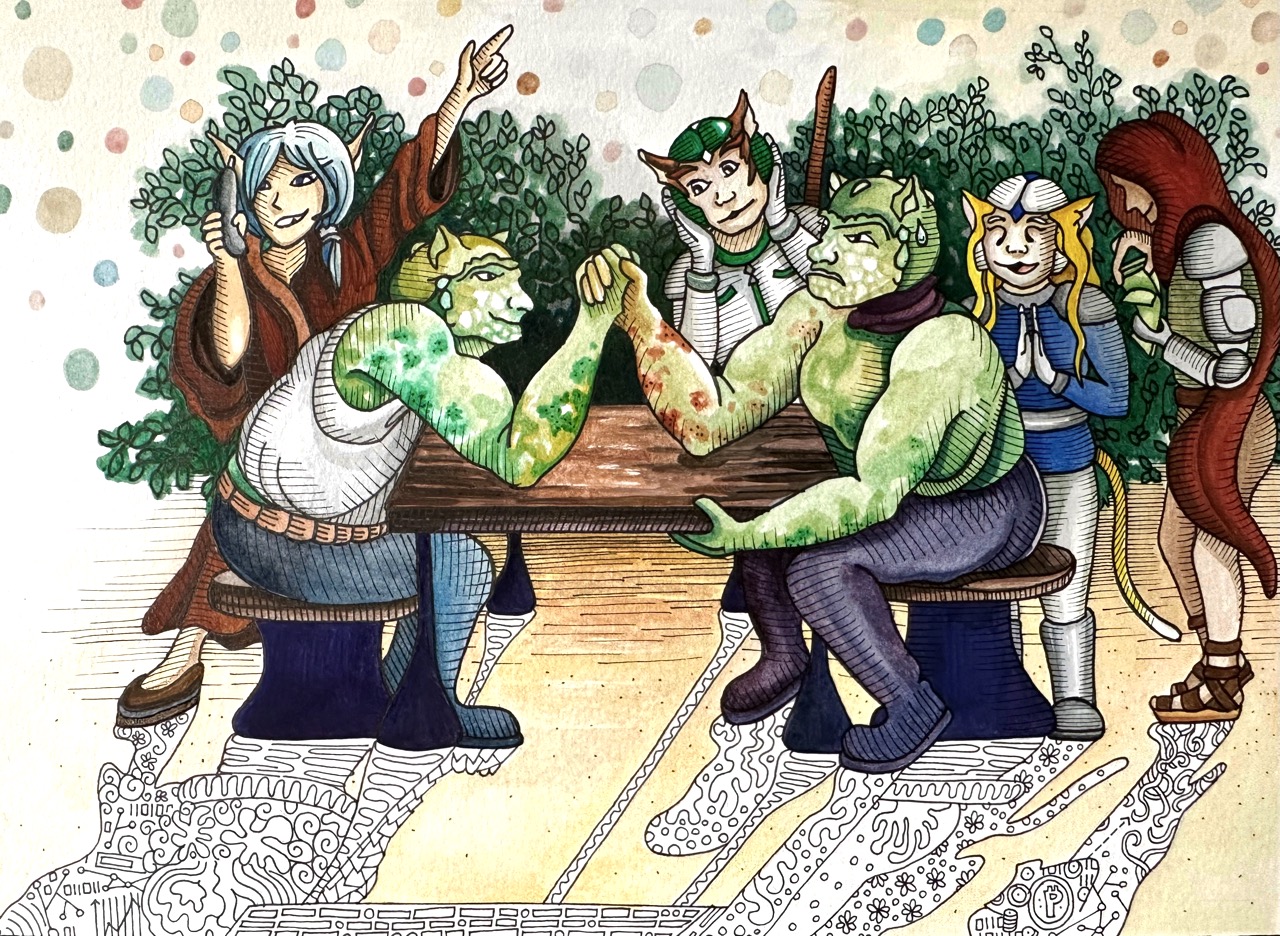
Humans, Ma’ghai, Rōg, Perethon, and other playable peoples create different physical assumptions, social positions, and mechanical profiles.
Attributes
Eight attributes cover the core physical, mental, perceptive, social, and expressive parts of a character.
Skills
Skills cover fields of practice: CQC, Ballistics, Industry, Computers, Intrigue, Physical Science, Life Science, Piloting, Language, Psionics, and others.
Specializations
Specific practice matters. A general technical character and a machine-specialized engineer should behave differently under pressure.
Feats and Talents
Feats create persistent advantages and sub-actions. Talents add specific actions, reactions, or exceptional capabilities.
Vigor and injuries
Vigor tracks stamina, alertness, and short-term capacity. Injuries stay on the sheet and poison future attempts.
Build a crew from attributes, skills, gear, feats, talents, injuries, and bad decisions.
Get the Sneak Peek PacketPlayable bodies, playable cultures.
The species are not costume pieces. A high-gravity people, a spacefaring feline lineage, humans with late psionic onset, or an elegant long-lived culture should change how scenes look and how players think through them.
At the table, that difference appears through body, pressure, social expectation, attribute shape, sensory range, movement, endurance, and the assumptions other people bring into the scene.
If two characters approach the same obstacle the same way, the system has enough texture to make that sameness matter.
Domains of play.
A single procedure carries across different scenes. The fiction changes the input.
| Domain | Scene material | Player questions |
|---|---|---|
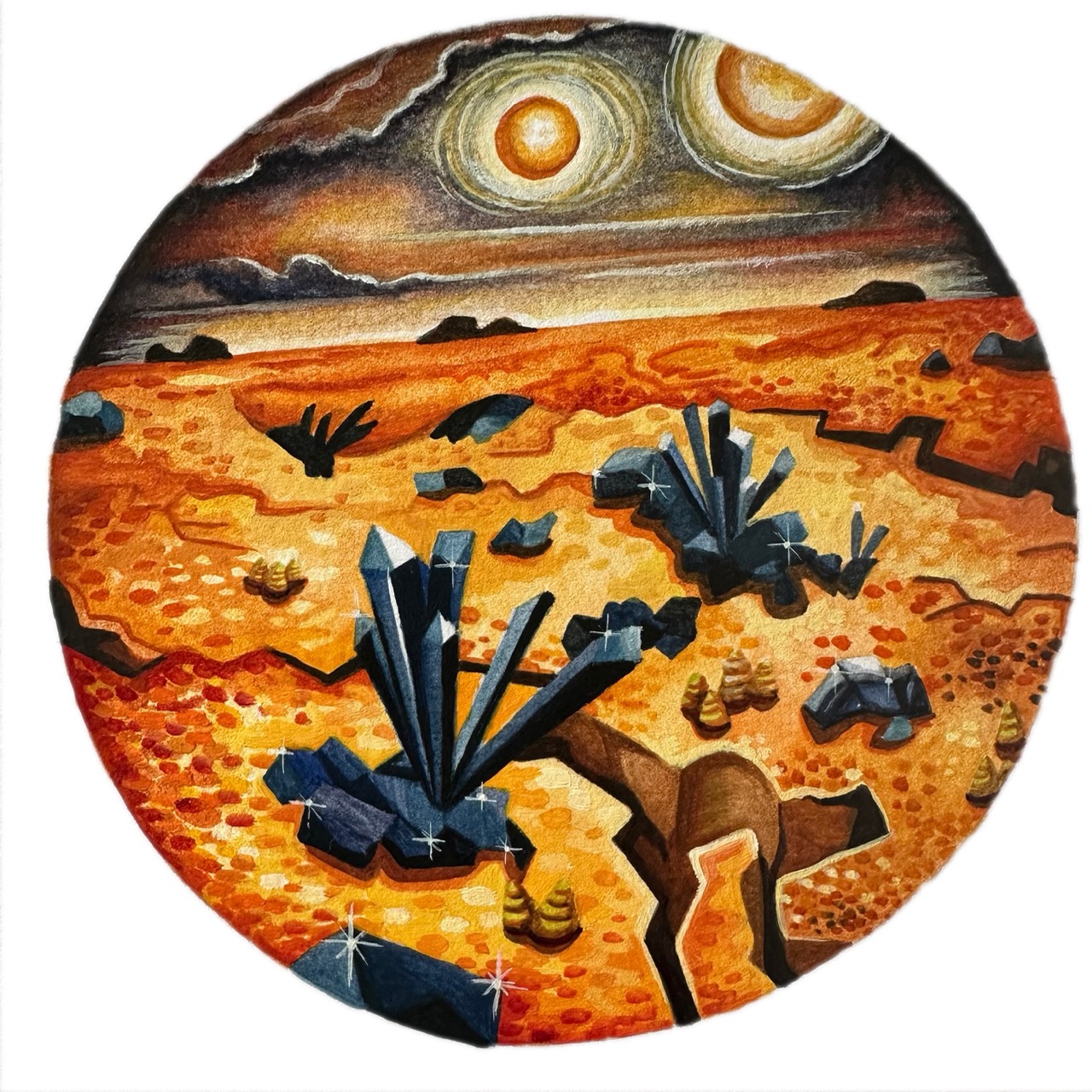
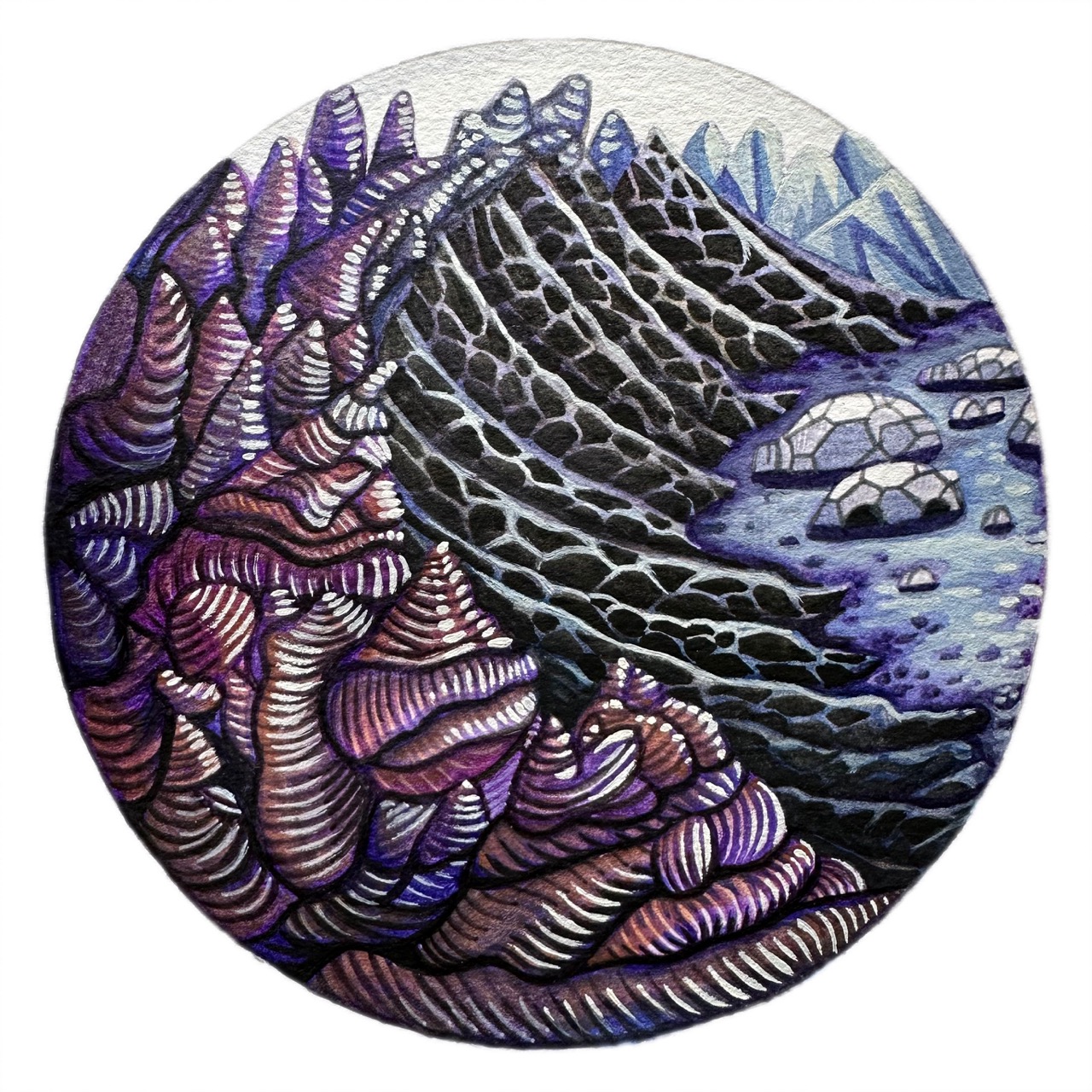
| Exploration | Ruins, planetoids, hostile terrain, strange ecology, damaged infrastructure, old systems. | What can be approached? What should be scanned? What is safe enough to touch? What information is worth the risk? |
| Combat | Cover, injuries, ambush, reactions, positioning, weapons, armor, exo-suits, conditions. | Where is the safest angle? Which target matters? Is withdrawal smarter? Can the fight be changed before it comes to trading damage? |
| Social pressure | Leverage, reputation, faction access, debt, fear, desire, authority, black markets. | What does the other side need? What can be offered? Which pressure point backfires? |
| Technical work | Drones, doors, ships, comms, power, computers, cybernetics, sabotage, repair. | Which subsystem matters? Is this mechanical, electrical, digital, biological, psionic, or social? |
| Psionics | Strain, resistance, perception, distance, risk, social consequence, law enforcement. | How far can the character push? What notices? What does the attempt cost even if it works? |
Example: sealed hatch.
The scene turns on inspection, target selection, injury, noise, and structural resistance. The roll resolves a specific approach inside a specific state.
Run the sealed-hatch scene, then see what your table does differently.
Get the Sneak Peek PacketExample: leverage.
Social play still uses procedure. Pressure, leverage, risk, and institutional structure replace hit points as the thing being moved.
Outcomes.
A result can grant the intent cleanly, grant it with cost, deny it while changing pressure, expose a new detail, escalate a threat, damage gear, worsen injury, shift leverage, or open a different route.
The important part is continuity. The new state should be clear enough for the next decision to make sense.
Advancement.
Characters grow through stronger attributes, deeper skills, specializations, feats, talents, gear, professional history, psionic development, faction access, and hard lessons.
Growth changes the way problems resolve. The character who once forced a hatch now reads the structure. The negotiator who once pushed blindly now changes the terms. The pilot who once escaped by luck now shapes the chase before velocity becomes the deciding factor.
| Early table | Later table |
|---|---|
| Players ask, “Can I try this?” | Players ask, “What state am I really acting on?” |
| Gear is equipment. | Gear becomes leverage, access, protection, signal, threat, or liability. |
| Failure surprises the crew. | Failure becomes something the crew can plan around, weaponize, or avoid. |
Bring it to this kind of table.
A group that enjoys tactical reads, build texture, strange environments, social leverage, equipment choices, injury consequences, and systems that can be learned will have plenty to bite into.
The Observer gets scenes with enough internal logic for players to make a mess without requiring every answer to be written ahead of time.
Tacticians
Position, preparation, cover, angle, injury, timing, and tool choice alter outcomes before the roll.
Roleplayers
Character judgment matters in social scenes, pressure scenes, bad bargains, faction problems, and irreversible choices.
Builders
Classless construction gives room for specialists, hybrids, strange professionals, and characters who should probably not be trusted near equipment.
Explorers
Planets, ruins, ships, settlements, infrastructure, organisms, anomalies, and political borders all offer surfaces to test.
Science-fiction tables
Cybernetics, psionics, ships, power systems, violence, communications, medical tech, AI, and law all have procedural weight.
Observers
The framework handles bad ideas, edge cases, and player improvisation without turning every ruling into a separate subsystem.
Enough to brief the table. Enough to start making calls.
Get the Sneak Peek PacketRun the first situation.
Bring a crew, an Observer, a few dice, and enough bad judgment to test the system properly.
Get the Sneak Peek Packet